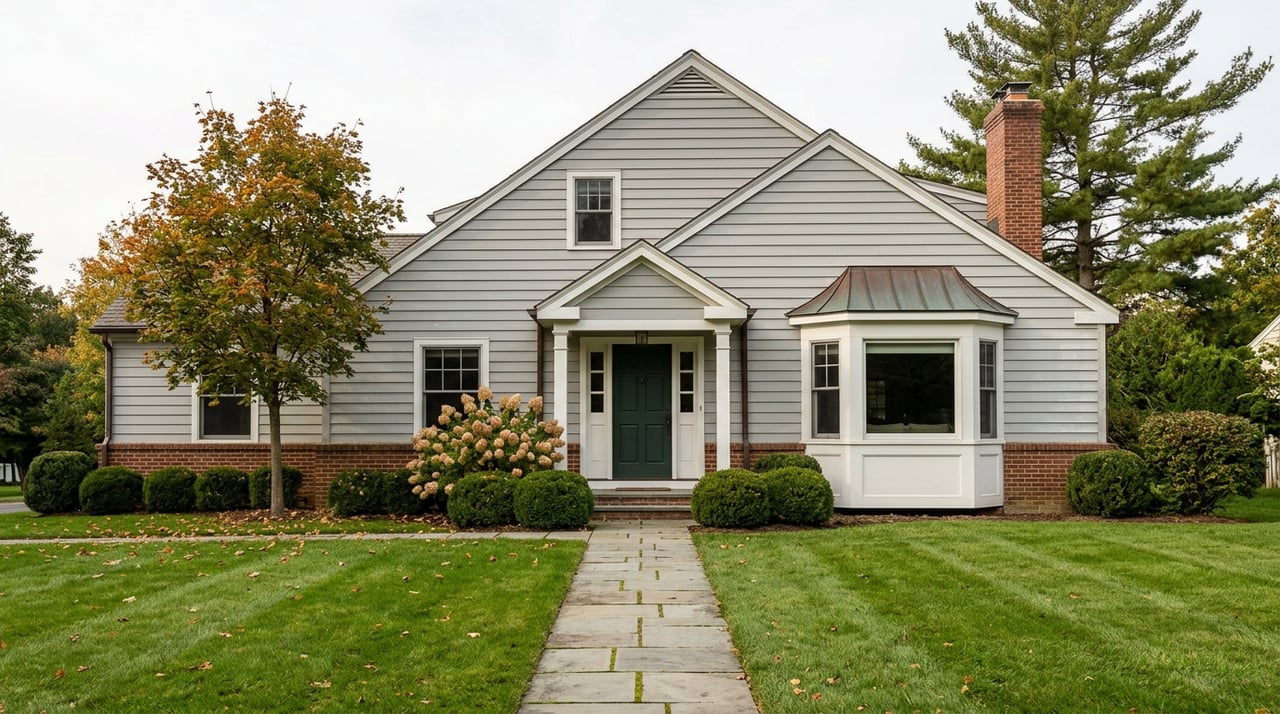
The Form Nobody in Bloomfield Expects to Sign at Closing
September 17, 2026
September 17, 2026
A buyer under contract on a place outside the village center in Bloomfield gets to the closing table expecting the usual stack of paper. Then someone slides over a one-page notice about noise, dust, and odors from farming activity that might occur near the property. Most buyers have never heard of it. Most sellers signed one themselves years ago and forgot it existed. It is not a red flag. It is New York State law, and it applies to more of Bloomfield than almost anyone realizes until the pen is already in hand.
That single disclosure form turns out to be the thread that connects two things that look unrelated on the surface: why a buyer signs a farming notice at closing, and why Bloomfield's median home price seems to tell a different story depending on which real estate site you check. Both come back to the same fact about this market. It is small, it is mixed between large acreage and village lots, and that mix changes what any given number actually means.
New York's Agricultural Districts Law, Article 25-AA, requires that when a purchase and sale contract covers real property located partially or wholly within a certified agricultural district, the seller has to hand the buyer a signed disclosure notice before the deal closes. The required language reads in part:
"This disclosure notice is to inform prospective residents that the property they are about to acquire lies partially or wholly within an agricultural district and that farming activities occur within the district."
The notice also flags something buyers rarely think to ask about on their own: that being inside an agricultural district can affect a property's access to water and sewer service under certain circumstances. It has to be signed by both sides before the transfer happens, and that signature gets recorded on the property transfer report filed with the state.
None of this restricts what a buyer can do with the land. It does not block future development, and it has no automatic effect on property taxes. What it does is put farming activity, and any limits on municipal water or sewer hookup, on the record before anyone signs a contract they might later claim they didn't understand.
The reason this disclosure shows up so often in Bloomfield transactions is geography, not chance. Ontario County's Consolidated Agricultural District 1 covers the towns of Bristol, Canandaigua, Canadice, East Bloomfield, Farmington, Geneva, Gorham, Hopewell, Manchester, Naples, Phelps, Richmond, Seneca, South Bristol, Victor, and West Bloomfield, along with the cities of Canandaigua and Geneva and the villages of Bloomfield, Clifton Springs, Manchester, Naples, Phelps, Rushville, and Shortsville.
The district was first created in 1972 and has grown through periodic county reviews since. As of the last eight-year review in 2020, it totaled roughly 256,478 acres, and the county added another 170 acres during annual enrollment windows between 2021 and 2024. Landowners can petition to have viable farmland added every year during a set thirty-day period, and the next full eight-year review is due by November 11, 2028. Working farms inside this footprint are not hypothetical. Rogers South Bloomfield Farm, on State Route 64, is one of the operations that sits inside district boundaries, alongside fertilizer and grain operations scattered through the same corridor.
Practically, this means a buyer looking at a colonial in the village might never trigger the disclosure, while a buyer looking at a home two roads over on a larger lot almost certainly will. The line isn't visible from the street. It follows tax parcel boundaries mapped by the county, not the character of the neighborhood.
Size matters here in a way that shows up directly in a seller's tax bill. One 52-acre parcel currently marketed in West Bloomfield lists true and total taxes of approximately $5,015 a year for the entire property, a number that reflects an agricultural exemption tied to the land's use rather than its market value. A buyer comparing that figure to a half-acre village lot's tax bill is not comparing like to like. The exemption follows the land's agricultural classification, and it can change if the new owner's use of the property changes after closing.
This is the detail that gets missed when people shop by price per acre alone. A seller pricing a large parcel needs to account for how the agricultural exemption affects what a buyer's carrying costs will actually look like after the sale. A buyer needs to ask directly whether the exemption transfers, lapses, or requires a new filing, because the answer changes the real cost of ownership from day one.
Here is where the disclosure and the tax math connect to something every buyer and seller in Bloomfield eventually runs into: the headline number depends entirely on which slice of the market you're looking at.
| Source and geography | Time window | Median sale or list price | Days on market |
|---|---|---|---|
| Town of Bloomfield | 3 months ending May 2026 | $442,000 (sale), down 49% year over year | 12 |
| Town of Bloomfield | August 2026 | $349,000 (list) | 13 |
| West Bloomfield | 3 months ending April 2026 | $180,000 (sale), down 47% year over year | 41, up from 8 a year earlier |
| East Bloomfield, all home types | April 2026 | $217,887 (sale), up 11% year over year | not reported |
| 14469 zip code | trailing 12 months, 2026 | $282,757 (sale), 54 properties sold | not reported |
Five numbers, one town and its immediate neighbors, and none of them agree. That is not a data error. It is what happens in a market where transaction counts are small enough that a single large-acreage sale or a single village starter home can swing the median 40 or 50 percent in either direction within a few months. West Bloomfield's days on market jumping from 8 to 41 tells the same story from a different angle. When your sample size is a handful of closings a quarter, one slow-moving farmhouse on 20 acres changes the average as much as five quick village sales combined.
The takeaway is not that Bloomfield's market is unpredictable. It is that a headline median from any single source is a thin signal here, and it gets thinner the more the geography spans both agricultural-district acreage and in-village lots. Comparing a specific property to specific, similar comps matters more in a market like this than it does somewhere with hundreds of monthly sales to smooth out the noise.
For sellers with larger parcels, the agricultural district disclosure and any tax exemption tied to the land should be part of the listing conversation from the start, not something that surfaces for the first time at the closing table. Buyers respond better to a disclosure they saw coming than one that shows up as a surprise a week before closing.
For buyers, the smartest move is to ask early whether a property sits inside Consolidated Agricultural District 1, since Ontario County maintains municipal maps for exactly this purpose, and to price the property against comparable lot sizes and uses rather than against a town-wide median that may be built from an entirely different mix of homes.
For anyone weighing a move into Bloomfield, the market's real story is written parcel by parcel, not in a single quarterly average.
Does the agricultural district disclosure mean I can't build or develop my land? No. The Agricultural Districts Law does not restrict what a landowner can do with property inside a district, and it does not prevent future residential or commercial development. It exists to inform buyers that farming activity occurs nearby, not to limit their plans.
Will being inside an agricultural district raise my property taxes? Being located in the district itself does not change your tax classification or rate. A separate agricultural assessment program can lower taxes on land actively used for farming, which is a different process administered independently by the local assessor, and it is that assessment, not the district boundary, that explains lower tax bills on working farmland.
If you're weighing a move into Bloomfield, whether it's a village colonial or a larger parcel that comes with its own disclosure paperwork, Arlene Reese can walk you through what a specific property's numbers actually mean before you're standing at the closing table finding out for the first time. Schedule a free consultation to talk through what you're looking at.
Stay up to date on the latest real estate trends.

Get assistance in determining current property value, crafting a competitive offer, writing and negotiating a contract, and much more. Contact me today.